
CaCooka-DL | AI Inspection Fuels Premium Intelligent Biscuit Production
In the current industrial AI vision track, numerous available solutions merely involve the simple transplantation of generic algorithms. Nevertheless, deep learning-based inspection technology that can be deeply deployed on production lines and operate stably over long-term operation is never a superficial retrofit project consisting of pre-trained model downloads and parameter tuning. Xispek holds a firm stance: the core of industrial deep learning inspection lies in building a full closed-loop system tailored to physical factories, covering the whole workflow from data accumulation to mass production implementation.
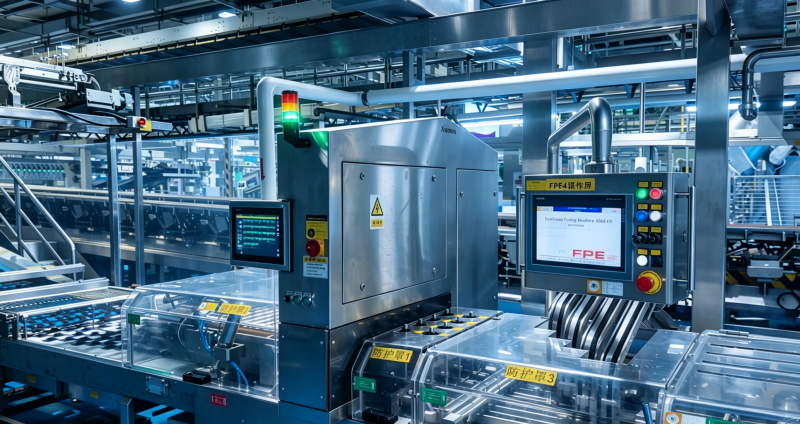

- Conventional Vision VS Deep Learning AI Inspection
Dividing Line in Fundamental Logic
Conventional Vision
AI Inspection
● Conventional machine vision inspection operates on a judgment system built on manually predefined rules.
Engineers have to manually set thresholds, contours, grayscale values and dimensional standards for each type of defect individually. Predefined rules tend to fail easily amid fluctuating workshop lighting, slight product deformation and irregular defect shapes. When dealing with hard-to-standardize flaws such as scratches, flash and irregular surface defects, the system commonly suffers from missed inspections, high false positive rates and frequent manual parameter calibration. This has long been a stubborn quality control pain point plaguing the food baking industry.


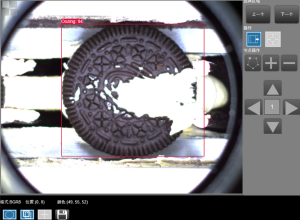
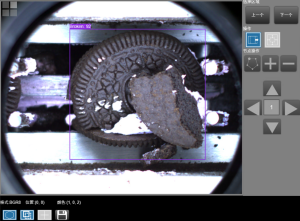
(Defect Definition Scope of Conventional Vision)
●Xispek Deep Learning AI Inspection breaks free from the rigid constraints of hard-coded rules.
We have built a full-link AI closed loop: Data Collection → Sample Annotation → Model Training → On-site Adaptive Commissioning → Stable Mass Production Iteration. The whole process falls into two core phases:
① Offline Optimization to Consolidate Model Foundation (Critical Pre-commissioning Procedure)
Prior to official launch, we capture massive on-site images at clients’ actual production lines, gather abundant qualified products and various defective samples to build a proprietary high-quality asset library.
Precise annotations are applied to train the AI model to autonomously learn normal product appearances and diverse defect features. After repeated iterative testing until the recognition accuracy meets industrial standards, the mature model is jointly debugged with industrial cameras and production automation systems. Mass production is permitted only after stable operation is verified.
② Autonomous Online Operation for Dynamic Production Scenarios
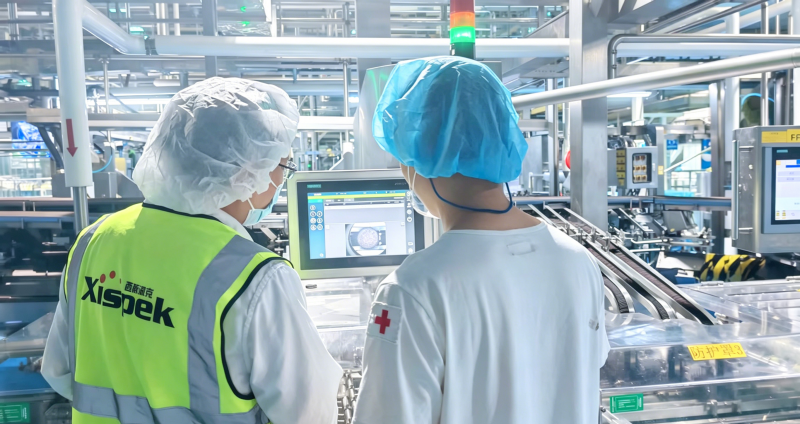
No continuous manual parameter configuration is required during mass production. Industrial cameras capture product images in real time; the AI instantly distinguishes qualified goods from defective ones and links up with peripheral equipment for automatic rejection of substandard products.
In complex and volatile workshop environments, the system autonomously matches optimal inspection logic and eliminates the reliance of conventional algorithms on idealized production conditions.
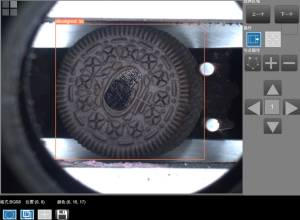
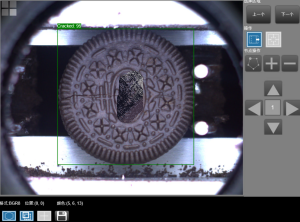
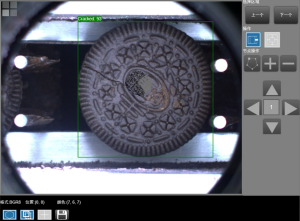
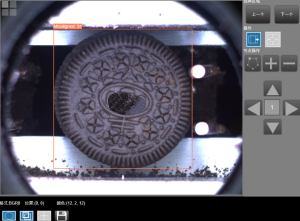


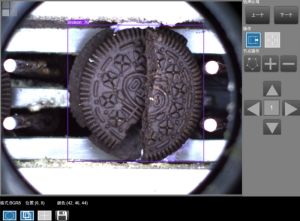
(Subtle Defects Captured by AI Inspection)
- Real Strength Verified by Deployment – Field Practice at Top-Tier Biscuit Manufacturers
Natural appearance variations are inherent to baked food products: inconsistent baking color of biscuits, irregular sandwich shapes, and most defects present non-fixed profiles. For a long time, manufacturers have had to rely on manual visual inspection, while conventional vision solutions fail to capture subtle anomalies effectively.
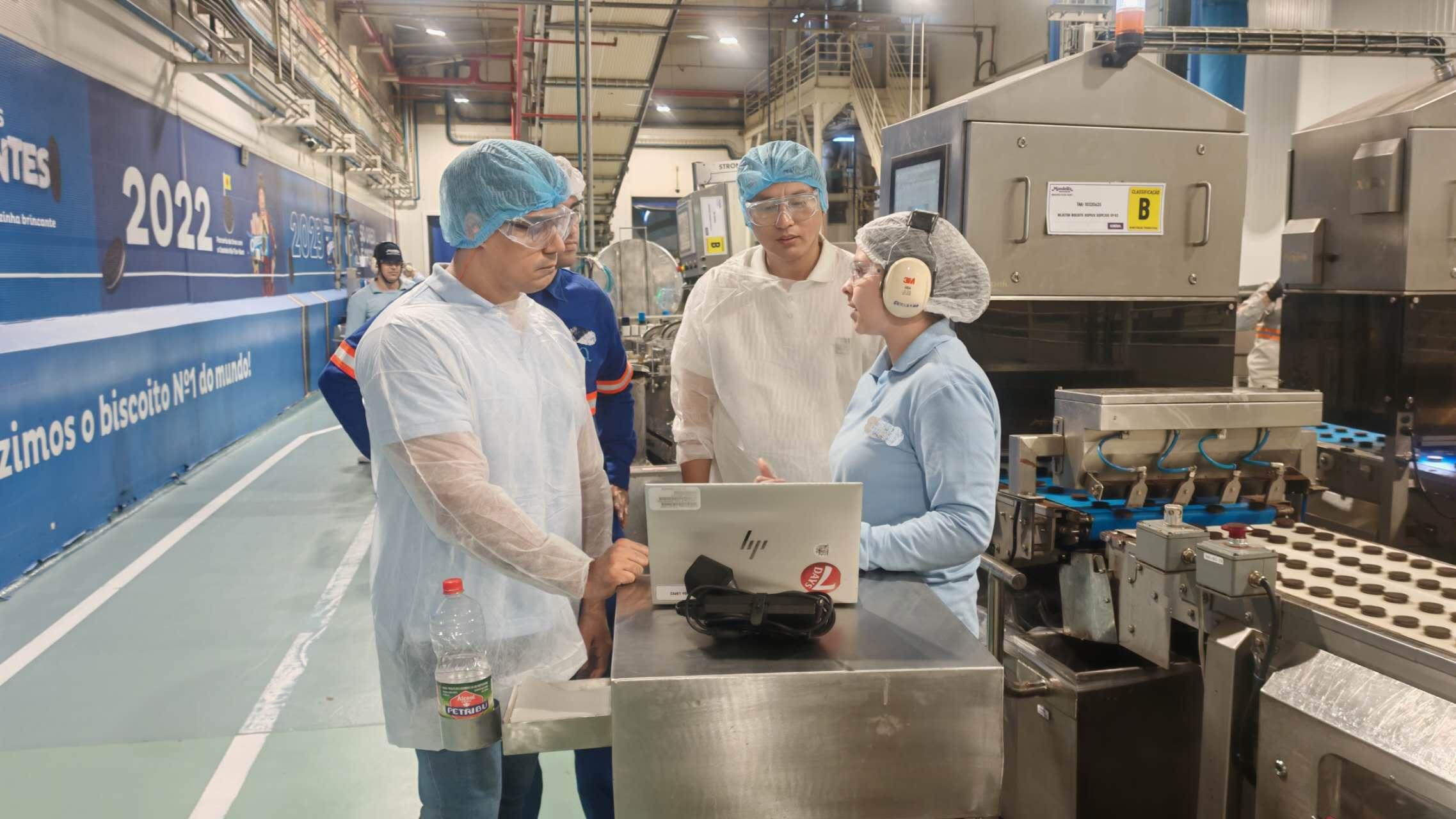
Xispek deep learning AI inspection system has been successfully deployed on the production lines of this leading biscuit enterprise and passed on-site line validation in a single trial run.

Remarkable Advantages of AI Inspection
The interior environment of sandwich machines is complicated. The system maintains high recognition accuracy even with interfering contaminants such as filling residues and biscuit crumbs.
In addition, detection windows tend to get stained with oil contamination after long-term operation of biscuit production lines, which washes out captured images and triggers false detections and false product rejection. By contrast, deep learning AI inspection delivers superior stability and robustness, effectively cutting production waste.
It accurately identifies tiny cracks, breakages and minor notches that conventional vision systems struggle to detect. Moreover, the AI’s learning capability gets progressively strengthened with prolonged on-site operation, enriching the model continuously and bringing inspection precision and stability to ideal levels.
Deep learning AI inspection imposes lower skill requirements on operators. Frequent parameter tuning is unnecessary amid product model changes, growing defect categories, light fluctuations or shooting angle deviations. The system supports plug-and-play with user-friendly one-touch operation.
Deep learning AI inspection can be directly retrofitted onto existing conventional algorithm-based inspection equipment.
Operators can rapidly switch between conventional biscuit image processing algorithms and AI inspection algorithms. This function is particularly vital in the early stage of project implementation. It addresses the demand for massive image datasets used for training and verification during AI modeling, enabling manufacturers to launch the inspection system rapidly.
Testimonial from the workshop supervisor:
The detection of subtle defects on biscuits has long been a tough pain point in our quality control management. Xispek’s deep learning AI inspection solution targets and resolves these existing difficulties effectively. Trained with massive samples collected from our actual production line, the model delivers far higher recognition precision than conventional algorithms. Featuring excellent line adaptability and stable continuous operation, the system greatly cuts the risk of defective products being shipped out, serving as solid and reliable support for our overall quality management system.
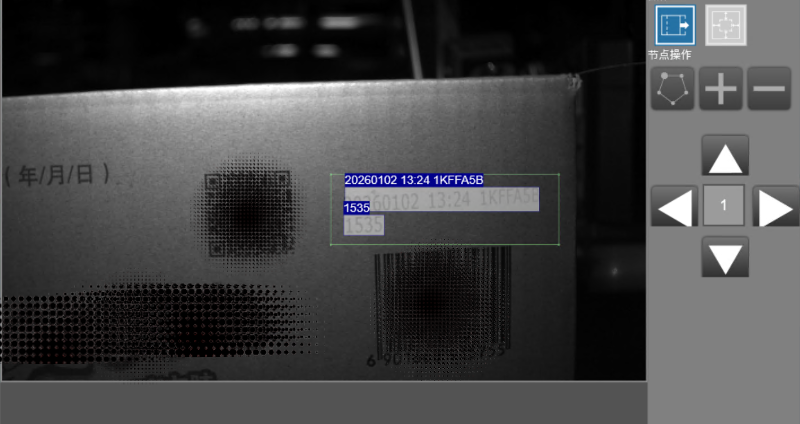
The project is being continuously upgraded at the current stage.In response to the latest national standard requirements on food safety label administration, the factory will soon launch the Xispek AI carton inspection system.The system targets double-line UV inkjet codes including production dates and expiry dates on outer cartons, and automatically checks the presence of codes as well as the correctness of characters.
It expands inspection coverage from defect detection of the biscuits themselves to full-process intelligent management of compliant markings on outer packaging.

Algorithms separated from on-site production data and devoid of a complete implementation closed-loop remain nothing more than laboratory technology. Xispek has long focused on the food, beverage and automated visual inspection sectors. We will keep advancing the industrial application of AI technologies, assisting manufacturing enterprises in building a new-generation quality control system featuring digitalization and automation.


Mr. Su:13912634161