
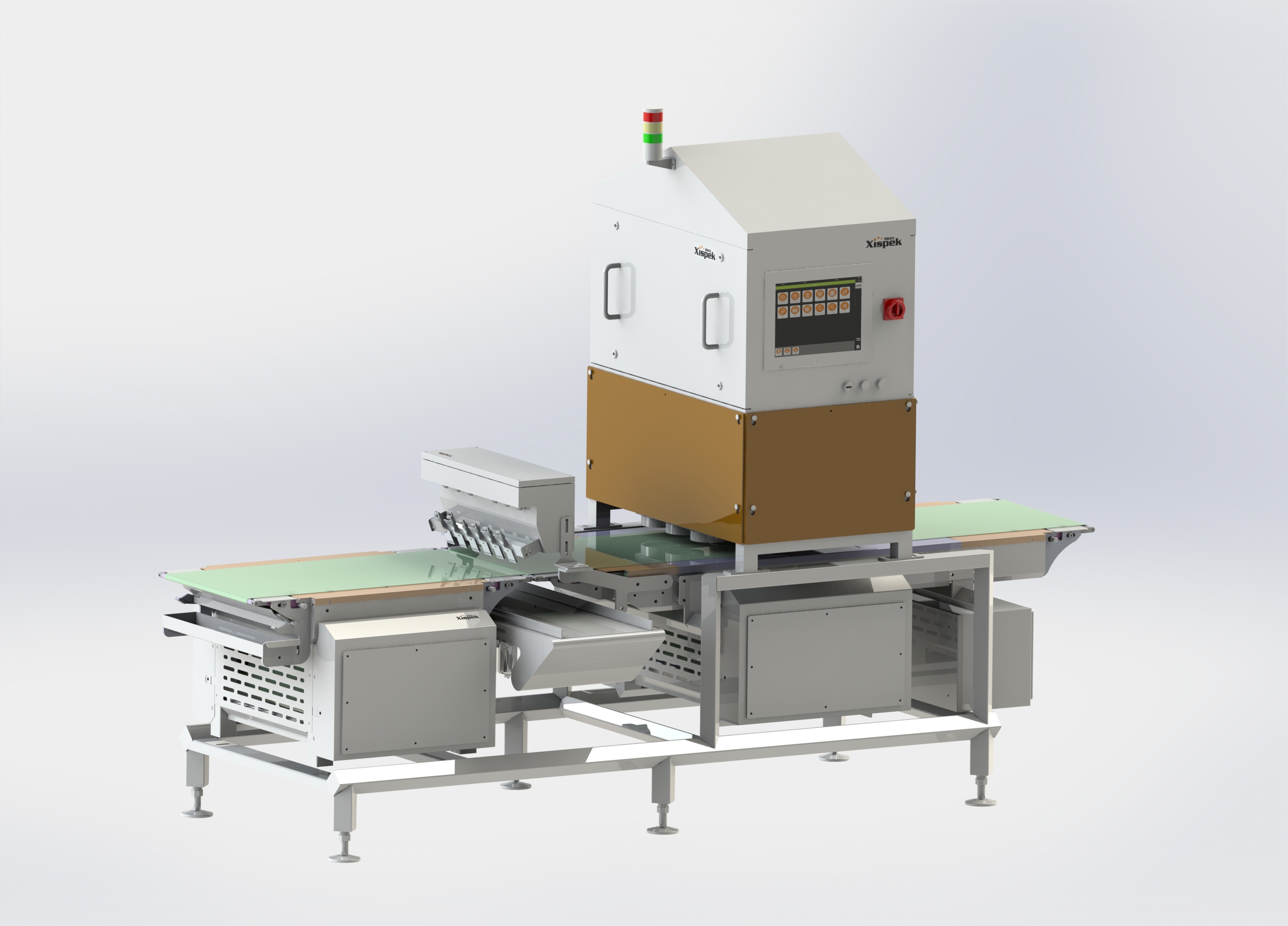
In today’s industrial AI machine vision sector, many solutions merely rely on the simple migration of generic algorithms. Robust deep learning inspection systems that can be deployed on production lines and operate stably over time, however, are never superficial retrofit projects based on pre-trained model downloads and parameter tuning.Xispek adheres to the core principles of industrial deep learning inspection: building a complete closed-loop system tailored for physical factories, covering data accumulation all the way through to mass-production implementation.The fully self-developed deep learning AI inspection solution from Xispek is now commercially available and validated on the production lines of leading biscuit manufacturers. Compared with conventional machine vision, this AI inspection technology delivers substantial qualitative improvements. Capable of continuous model optimization via autonomous learning, it identifies subtle defects that cannot be clearly defined for traditional vision algorithms, empowering manufacturers to enhance product quality and create tangible value for customers through technology.
Furthermore, the deep learning AI inspection platform is not limited to defect detection for sandwich biscuits. It also delivers consistent, reliable performance for outer carton coding inspection and printed code verification on the bottoms of aluminium cans.
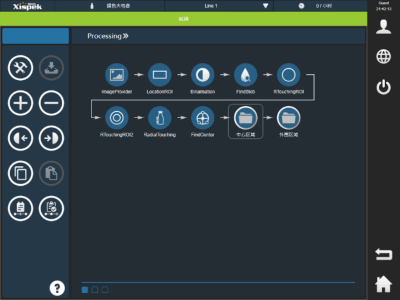
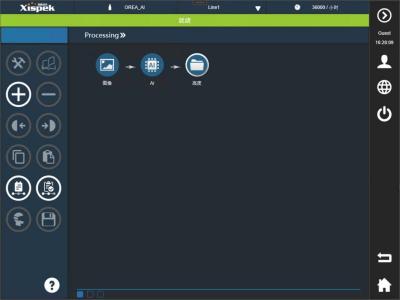
(Traditional Process VS AI Inspection Process)
 Conventional Machine Vision: Judgment System Based on Manually Preset Rules
Thresholds, contours, grayscale values and dimensional criteria must be manually configured for each type of defect. When facing fluctuations of on-site lighting, minor product deformation or irregular defect shapes, preset rules tend to fail easily.
For defects that are hard to define with uniform standards, such as scratches, flash and irregular surface blemishes, systems frequently suffer from missed detections, high false rejection rates and constant manual parameter tuning. This not only disrupts production efficiency, but also represents a long-standing quality control bottleneck in the food and baking industry.
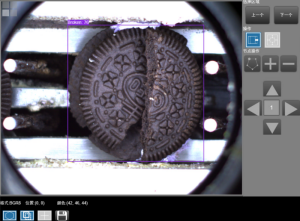
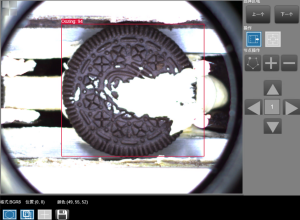
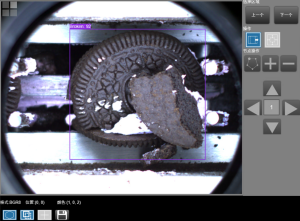
(Traditional vision works well for clearly defined, large or typical defects)
Xispek AI Inspection: Breaking Free from Rule-Based Limitations
We have built a full-chain AI closed loop consisting of data acquisition, sample labeling, model training, on-site adaptation commissioning and iterative optimization for stable mass production. The workflow is clearly divided into two major phases:
① Offline refinement to consolidate model foundations (critical pre-launch procedure)
Before official deployment, massive on-site images are captured directly from the customer’s actual production line. Numerous samples of qualified products and diversified defects are collected to build an exclusive high-quality image library. The AI is trained via precise labeling to autonomously learn the normal appearance of products and features of all types of defects. After multiple rounds of iterative testing, once the recognition accuracy meets industrial standards, the mature model is jointly commissioned with industrial cameras and production line automation systems. Mass production is only launched after stable operation is verified.
② Autonomous online operation to adapt to dynamic production scenarios
Continuous manual parameter configuration is unnecessary during mass production. Industrial cameras capture product images in real time. The AI instantly distinguishes qualified and defective products and triggers automatic rejection of faulty items by linked equipment. Faced with complex and variable line conditions, the system can independently activate the optimal inspection logic and remove the reliance of traditional algorithms on idealized production environments.
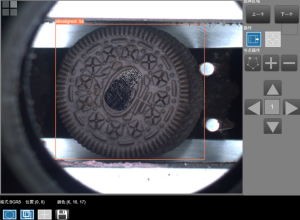
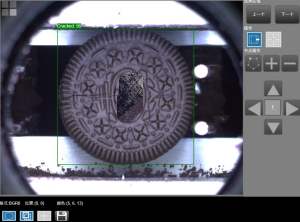
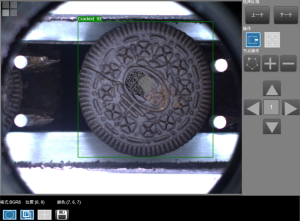
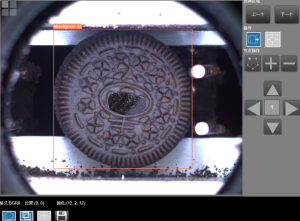
(No manual definition required; the AI system learns autonomously)
Strong anti-interference capability: The interior of sandwich biscuit machines features complex backgrounds. The system maintains high recognition accuracy even amid interference from filling residues and biscuit crumbs.
After long-term operation of biscuit production lines, the inspection window easily accumulates oil stains, which overexpose captured images and frequently trigger false detections and false rejects. Deep learning AI inspection delivers superior stability and robustness to cut production waste.
High defect recognition rate: It accurately detects subtle cracks, breakages, small notches and other defects that traditional vision struggles to identify. As runtime extends, the AI continuously enhances its learning capacity, forming a more complete model to bring inspection precision and stability to an optimal level.
No repeated parameter tuning required: Deep learning AI inspection lowers operational skill requirements. Frequent parameter adjustments due to product changeovers, new defect types, lighting fluctuations or shooting angle deviations are eliminated. It supports plug-and-play, user-friendly operation.
Upgradeable for existing conventional equipment: Deep learning AI inspection can be directly retrofitted onto equipment running traditional algorithms.
Free algorithm switching: Operators can rapidly toggle between classic biscuit image processing algorithms and AI inspection algorithms. This function is especially vital in the early project phase. It resolves the challenge of assembling massive training and validation image datasets for AI modelling, satisfying manufacturers’ demands for rapid commissioning.

Mr. Su:13912634161